Marmaris, 1998: my first artificial intelligence in a factory
In 1998 I had been working for six years as a software and artificial intelligence engineer at Keraben, one of the big ceramic tile groups in Castellón, Spain. We had built systems for almost every section of the group's factories. And that year the company had staked everything on a new product: the Marmaris. Large-format pieces that imitated marble, with its veins, its shine, that depth that fools the eye. At Cevisama, the great tile fair, the Marmaris was the star. The sales team came back with orders from half the world.
Sebastian J. Brau's blog
Enter your email and you will get an alert when something new is published. Unsubscribe anytime.
One afternoon the plant's operations director walked into my office looking shattered. He came in like someone going to the court of last resort, and said: "I figured if anyone can fix this, it has to be Sebas. With one of those magic tricks he does." Magic: that's what my colleagues at Keraben called artificial intelligence, because back then it sounded like something from another planet. That man and I had lunch together every day; there was enough trust to talk like that. And there was one of those problems that keep you awake at night.
The Marmaris pieces, once fired and with their crystalline glaze on top, went through a final polishing and rectifying stage. On the pilot lines everything had gone fine. But when the product moved to the mass production lines, the monster appeared. Tiny curvatures, the kind that are invisible to the human eye on a normal tile, were lethal on these pieces: the polisher, which works at a fixed height, left bald patches. In the centre of the piece if it had come out concave. At the corners if it had done what in the factory we called a "moustache". And a piece with a bald patch was scrap: rubbish. Pieces of 1.20 metres, with all the production cost already sunk into them, straight into the container. At unbearable rates. On exactly the product we had a table full of orders for.
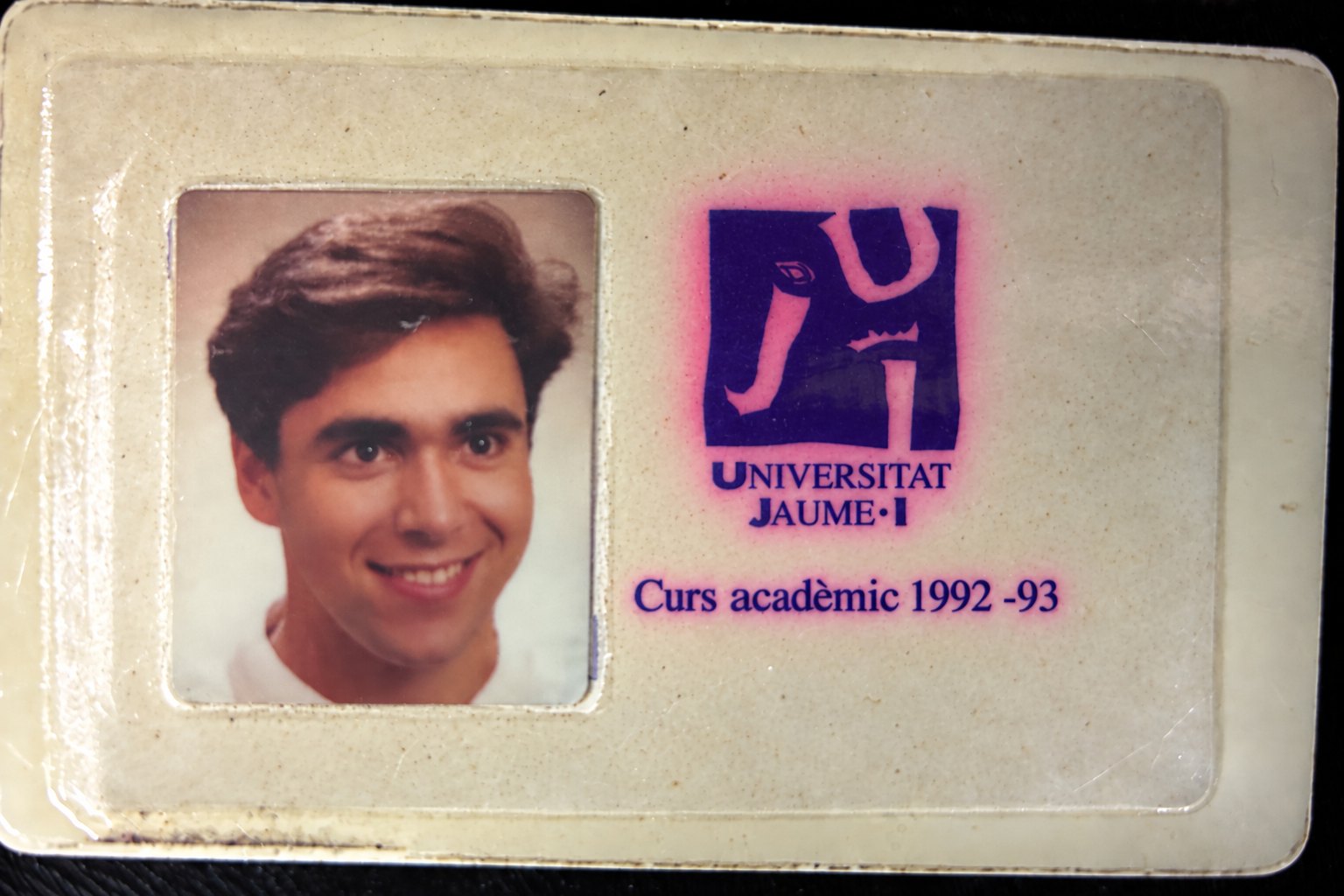
That same afternoon, when I got home, I picked up the phone and called the man who had been my artificial intelligence professor at Universitat Jaume I: Ángel Pascual del Pobil, professor of AI at UJI. I explained the problem and asked to meet so we could think together about how to attack it.
With his support, within a few weeks we had the system running. We bought a Keyence laser that produced a perfect topographic image of every piece as it left the kiln, one of those big Sacmi kilns: an exact relief of its flatness. And we built an artificial intelligence that learned. From whom? From the kiln operators. Because those technicians already knew how to straighten pieces by acting on the firing curve: by raising or lowering the temperature at certain thermocouples, they could correct the curvature. The AI watched them work, learned the relationship between the firing curve and the movement of each piece, and after a few weeks it was doing something that still makes people's eyes widen when I tell it today: it detected, thirty minutes in advance, when the trend the production was following was going to turn into a moustache or a concave curvature that would end up as a bald patch on the polisher. And it acted directly on the thermocouples to rebalance the curvature before the defect ever came to exist.
The problem disappeared. That project, developed with the help of del Pobil and a great group of Keraben professionals, saved the company millions of euros. And it saved something that can't be calculated: the brand prestige of having promised the star of the fair to half the world and being able to deliver it.
All of that happened in 1998. We programmed in LISP, the language created by John McCarthy, the same man who decades earlier had coined the very term "artificial intelligence". And that AI was what today we call a narrow, specific, vertical AI: it couldn't write a poem, but about how Marmaris pieces curved inside a kiln there was nothing you needed to explain to it. It sensed it perfectly. It knew how they were going to move, and when.
Almost thirty years later, the pieces are still there. So is the knowledge. You just have to know it exists: it lives in the heads of the operators who already know how to correct the defect, and the AI's job is to watch them, learn, and get there half an hour before they do. That hasn't changed since 1998. What has changed is that today's factory already has the laser, already has the camera and already has the data; all that's missing is connecting them to the decision without asking the plant to stop.
That is what this series is about. Every Tuesday and Thursday I will publish one piece: first the vocabulary you need so as not to confuse two artificial intelligences that have nothing to do with each other, and then real cases told hour by hour, with what happened on the floor and not what the slide says.
If you want to know which defects in your plant only get caught in time when the operator who knows them is on shift, and what would happen if an AI learned from him, the three-minute self-assessment here tells you with your case, not mine.